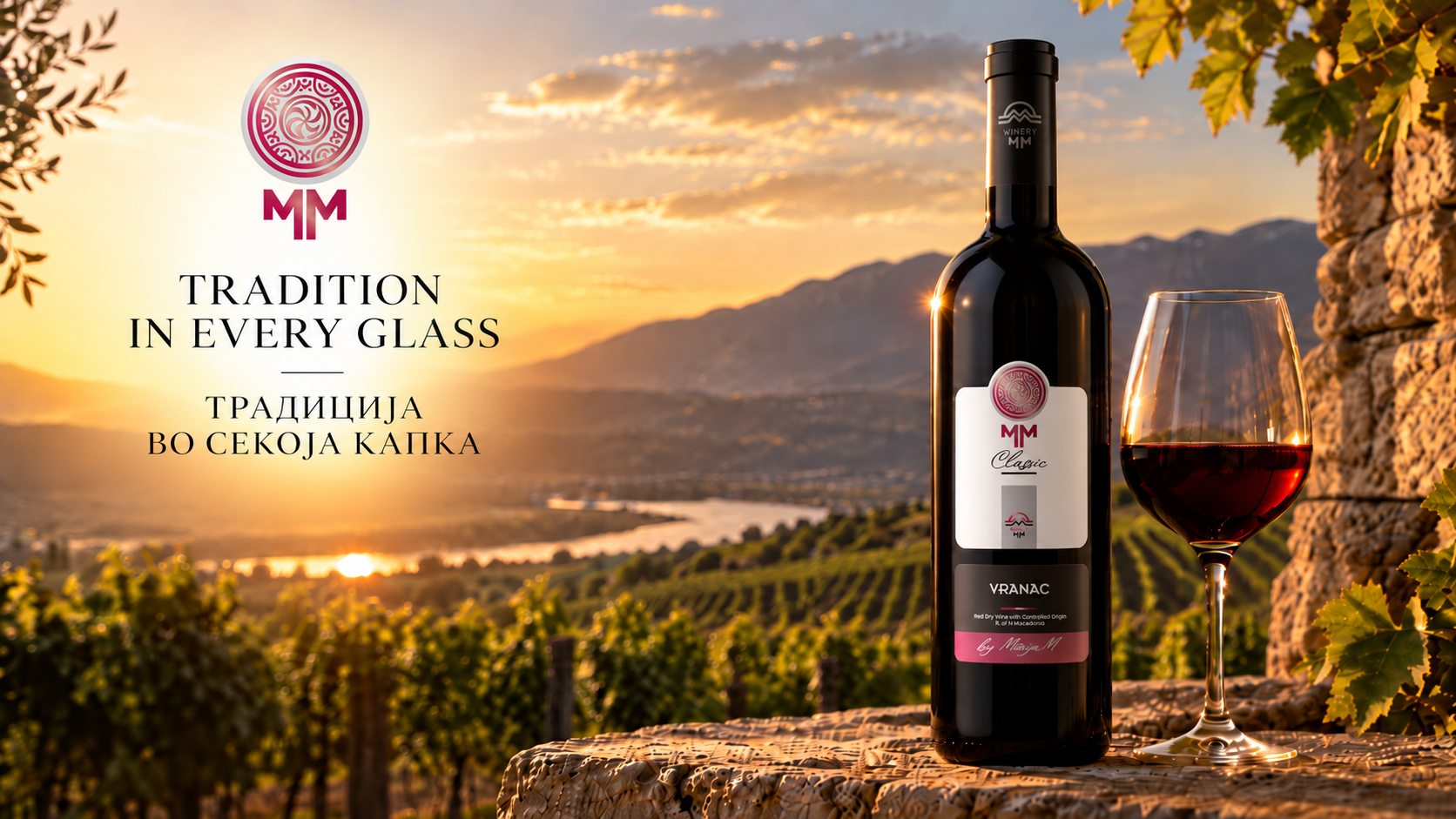
Every bottle of wine begins long before the cellar, the label or the first pour. It begins in the vineyard — with the land, the climate, the altitude and the rhythm of the seasons.
At MM Winery, this idea is more than a romantic expression. It is one of the foundations of our philosophy: the quality of wine starts in the vineyard.
Macedonia is home to a long winemaking tradition, but what makes its wines distinctive is not history alone. The character of each wine is shaped by the natural conditions of the place where the grapes are grown. Understanding Macedonian wine terroir means understanding this relationship between place and taste — the combination of soil, climate, altitude and vineyard location that gives a wine its individual character.
What does terroir really mean?
Terroir is a French term used to describe the complete natural environment of a vineyard. It includes the soil, climate, altitude, exposure to sunlight, rainfall, wind and even the way temperatures change between day and night.
Two vineyards can grow the same grape variety and still produce wines that taste noticeably different. That is because the grapes react to their surroundings. A warmer site may produce riper fruit, while a cooler or higher location may preserve more freshness and acidity. A dry, stony soil can influence how deeply vine roots grow and how the plant develops through the season.
This is why origin matters. Wine is not only made from a grape variety; it is also shaped by a place.
Macedonia: an old wine country with a modern energy
MM Winery describes its philosophy as “A Fresh Wave from the Old World.” It reflects the balance between Macedonia’s centuries-old winemaking culture and a new generation that applies modern knowledge, technology and international experience.
Our wines are connected to two important wine areas: Tikvesh and Ovce Pole. Both benefit from abundant sunshine, warm growing conditions and locations where altitude can create cooler nights after hot days.
That contrast between warm days and cooler nights is valuable for grape development. The warmth helps grapes reach ripeness and flavour concentration, while cooler nights can help preserve freshness, natural acidity and aromatic definition.
Read more about the MM Winery story and our winemaking philosophy.
Why altitude matters in the vineyard
Altitude can have a surprisingly strong effect on wine. As vineyards rise above sea level, temperatures — especially at night — tend to become cooler. This slower, more balanced ripening can help grapes develop intense flavour without losing too much acidity.
In the Ovce Pole wine district, vineyards are found at elevations of roughly 330 to 560 metres. Combined with the area’s many hours of sunshine, this creates an environment where grapes can achieve both maturity and structure.
For the wine drinker, that balance often appears as fruit richness together with freshness and a more defined finish.
Soil: the hidden part of the story
Most people think first about sunshine and temperature, but the soil beneath the vines is equally important.
Soil affects how quickly water drains, how much moisture is available to the roots, how vigorously the vine grows and how the plant responds during dry periods. In some Macedonian vineyard areas, soils may contain combinations of clay, sand, stone and saline elements.
The relationship is complex. Wine does not simply “taste like soil.” Instead, soil influences the vine’s growth and the way the grapes mature. Over time, those differences become part of the wine’s texture, concentration and overall style.
The grape variety is only part of the equation
Varieties such as Vranec, Merlot, Cabernet Sauvignon, Pinot Noir, Chardonnay, Riesling and Sauvignon Blanc all have their own natural characteristics. But the final character of a wine depends on much more than the name of the grape.
Take a red variety like Merlot. In one region it may be soft and fruit-driven; in another, more structured and concentrated. Chardonnay can appear crisp and citrus-led in one environment, while a warmer site may give it a rounder, riper expression.
This is one reason exploring wine by origin is so rewarding. The grape variety gives you a starting point. The vineyard gives the wine its individual voice.
Explore the MM Winery Classic collection and discover our red and white varieties.
From vineyard decisions to the bottle
Terroir creates the potential, but people still shape the result.
Winemakers decide when to harvest, how to manage fermentation, whether a wine should remain in stainless steel or mature with oak, and how long it should rest before bottling. These choices can highlight different sides of the same fruit.
The best winemaking does not try to erase the vineyard. It tries to express it clearly.
That idea is especially important for MM Winery, where traditional Macedonian wine values are combined with modern production methods. The goal is consistency and quality, while still preserving a clear sense of origin.
Why warm days and cool nights are so important
During the day, sunshine helps grapes build sugars and flavour. At night, cooler temperatures slow the process down.
This daily temperature difference can support a longer, more gradual ripening period. Instead of simply becoming sweet, the grapes have more time to develop aroma, colour and flavour while retaining balance.
For red wines, this may contribute to deeper colour and richer fruit character. For white wines, it can help protect the freshness and aromatic qualities that make the wine lively in the glass.
What does terroir mean for you as a wine drinker?
You do not need to be a sommelier to appreciate terroir. The easiest way is simply to become curious about where a wine comes from.
Next time you open a bottle, look beyond the grape variety. Ask yourself:
- Which country and wine region does it come from?
- Was the vineyard in a warm or cooler location?
- Was it grown at higher altitude?
- Is the wine light and fresh, or ripe and powerful?
- How might the place have contributed to that style?
Over time, these questions make wine more interesting. Instead of tasting only “red” or “white,” you begin to notice a connection between geography and flavour.
A bottle is a small piece of a place
One of the most fascinating things about wine is that it can capture a particular place and season in a bottle.
The vineyard cannot be copied exactly somewhere else. The same combination of sunlight, soil, altitude, weather and tradition belongs to that location.
For MM Winery, this is the heart of the story: Macedonian roots, vineyards shaped by the landscapes of Tikvesh and Ovce Pole, and a modern approach to bringing those wines to consumers around the world.
Good wine has a taste. Great wine also has an origin, a character and a story.
Explore further: Discover MM Winery Vranec and read our complete guide to Vranec to learn why this distinctive local grape is so important to Macedonian red wine.
MM Winery Vranec
Explore the wine connected to this story and discover its character, origin and style.
View Wine Details →