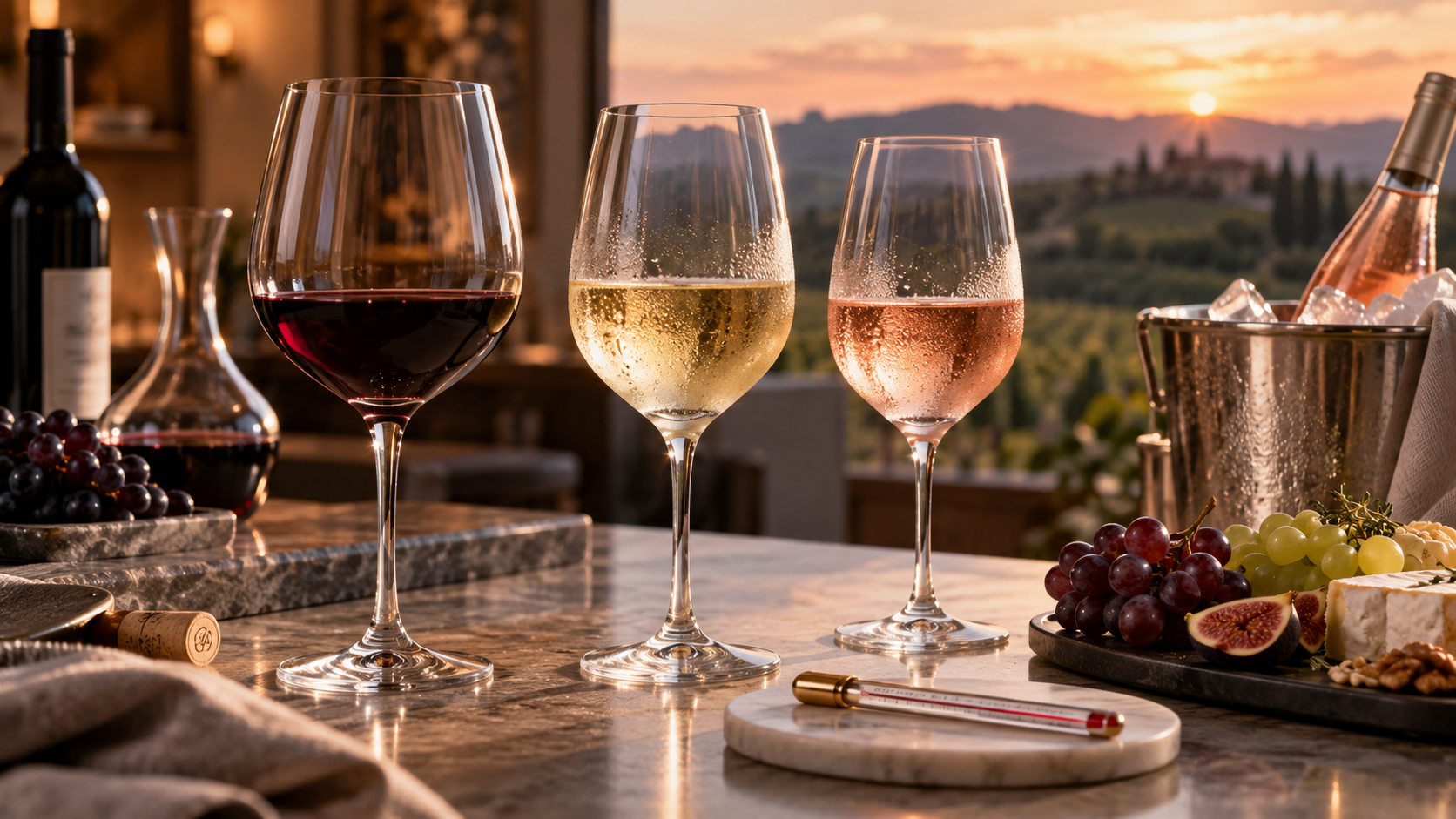
A good bottle can taste surprisingly different depending on its temperature. Serve a red wine too warm and the alcohol may feel heavy. Serve a white wine too cold and its aroma and texture can disappear. The goal is not to follow a rigid rule; it is to give the wine enough freshness while allowing its character to open in the glass.
This practical wine serving temperature guide gives you sensible ranges, easy chilling methods and a few habits that make a visible difference at the table.
Wine serving temperatures at a glance
| Wine style | Starting range |
|---|---|
| Light red | 12–14°C |
| Medium-bodied red | 15–17°C |
| Full-bodied red | 16–18°C |
| Crisp dry white | 7–10°C |
| Richer white | 10–13°C |
| Rosé | 8–11°C |
| Sparkling | 6–8°C |
These ranges are practical starting points rather than absolute rules. The wine can warm naturally in the glass, so it is usually better to begin slightly cooler than too warm.
Why temperature changes the taste of wine
Temperature affects what you smell and what you taste. Warmer wine releases aromas more quickly, but it can also make alcohol feel more noticeable and soften the sense of freshness. Cooler wine highlights acidity and structure, although excessive chilling can make it seem closed, thin or almost flavourless.
That is why “room temperature” is not always the best instruction for red wine. A modern heated room is often much warmer than a traditional cellar. Most reds feel more balanced slightly below that temperature.
A simple temperature guide
Use these ranges as a reliable starting point:
- Light, fresh red wines: 12–14°C. A short time in the fridge can make a lighter red more vivid and easier to drink.
- Medium-bodied red wines: 15–17°C. This is a comfortable range for many Merlot, Vranec and similar styles.
- Full-bodied reds: 16–18°C. Serve them cool rather than warm, then let the glass evolve naturally.
- Crisp dry white wines: 7–10°C. This keeps citrus, floral and mineral notes bright. Explore examples such as Chardonnay and Riesling.
- Richer white wines: 10–13°C. A little less chill lets texture and ripe fruit show.
- Rosé wines: 8–11°C. The best range is fresh and lively without masking the fruit. See MM Winery Rosé as a current example.
- Sparkling wines: 6–8°C. Keep them properly chilled before opening.
These are guides, not a test. If a wine tastes too sharp or muted, hold the bowl of the glass for a minute. If it starts to feel broad or alcoholic, place it in the fridge or an ice bucket briefly.
How to chill wine without overdoing it
The most reliable method is a fridge, because it cools gradually. As a broad rule, a bottle at typical room temperature needs around two hours in the fridge to reach a crisp white-wine range. A red wine normally needs much less: about 20–30 minutes can take the edge off a warm bottle.
Need it faster? Use an ice bucket filled with ice and water, not ice alone. The water makes contact with the bottle and cools it more evenly. Rotate the bottle once or twice and check it after 15 minutes. For a white or rosé, this is often enough to move from warm to ready.
Avoid leaving a bottle in the freezer and forgetting it. Besides the obvious mess if it freezes, rapid over-chilling can leave the wine muted when you need it most.
Red wine does not need to be warm
This is the most useful correction for many wine drinkers. A red served at 22–24°C may smell rich at first, yet feel sweet, hot and flat after a few sips. Try serving it at 16–17°C instead. The fruit becomes cleaner, the tannins feel more controlled and the finish often seems longer.
For a bottle such as Merlot Classic, aim for a lightly cool cellar feel rather than a warm living-room feel. If the bottle has been sitting on a shelf, give it a short chill before dinner and remove it a few minutes before pouring.
Glasses and table conditions matter too
Choose a clean glass with enough room to swirl gently. The bowl lets aroma collect, while the stem keeps warm hands away from the wine. On a very hot terrace, pour a smaller amount more often so the bottle stays cool. In winter, do the opposite: avoid placing a white wine near a radiator or a red right next to a fireplace.
Wine also changes during the meal. It is completely normal for the final glass to taste a little different from the first. The idea is to start close to the ideal range, then enjoy its movement rather than trying to keep it perfectly fixed.
A quick table-side check
Before you serve, ask three questions:
- Does the wine smell open and fresh, rather than strongly alcoholic?
- Does it feel balanced on the palate, rather than too sharp or too soft?
- Does the temperature suit the food: fresher for light dishes, a little warmer for richer ones?
If the answer is yes, you are ready. There is no need for specialist equipment at every meal; a simple wine thermometer is useful, but your senses are the best final check.
The right temperature is a small detail with a large effect. Pair it with a thoughtful choice of wine and food, and an ordinary dinner can immediately feel more considered.
Serving Vranec? See our dedicated guide to Vranec serving temperature, glass choice and decanting.
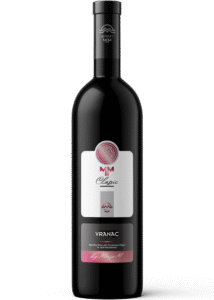
MM Winery Vranec
Explore the wine connected to this story and discover its character, origin and style.
View Wine Details →