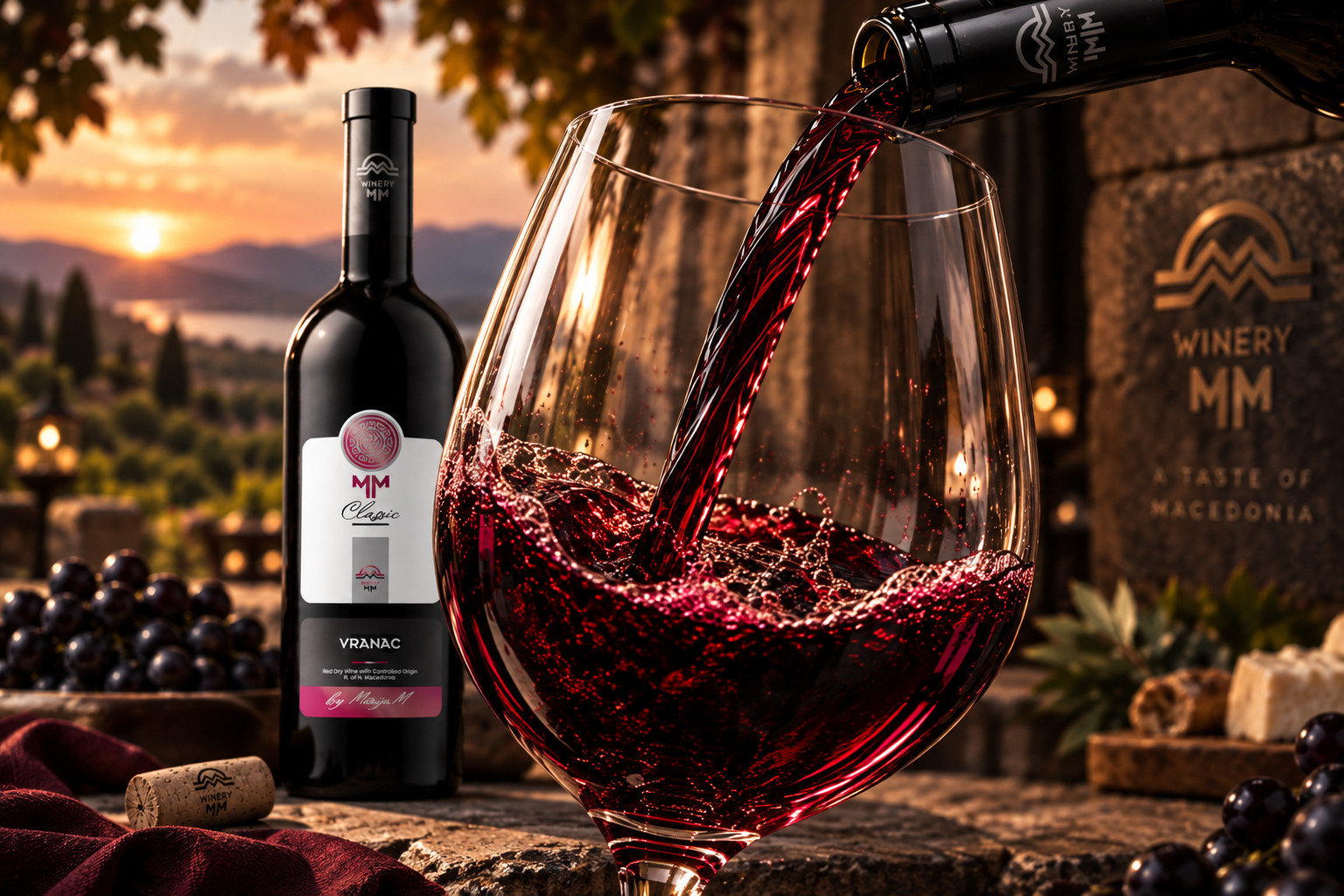
Vranec is one of the grapes that best tells the story of Macedonian wine. Deep in colour, generous in fruit and naturally structured, it can produce powerful red wines while still retaining the freshness that makes a wine enjoyable at the table.
For anyone discovering wines from North Macedonia, Vranec is one of the most important varieties to know.
What Is Vranec?
Vranec is a traditional Balkan red grape variety grown in several countries across the region. In North Macedonia, however, it has become particularly important and is widely regarded as a flagship variety for red wine production.
The name is commonly associated with strength, darkness and the image of a powerful black horse — an appropriate description for a grape capable of producing deeply coloured and characterful wines.
Vranec thrives in warm vineyard conditions and develops ripe fruit while maintaining enough natural acidity to keep the wine balanced.
Why Is Vranec So Important to Macedonian Wine?
International grapes such as Cabernet Sauvignon, Merlot and Chardonnay are widely grown in North Macedonia, but Vranec provides something different: a direct connection to the wine culture of the Balkans.
For wineries, it offers an opportunity to create wines with a recognisable regional identity. For wine drinkers, it offers something less familiar than the international varieties found almost everywhere in the world.
This combination makes Vranec increasingly interesting for people searching for authentic European wines and new grape varieties to explore.
What Does Vranec Wine Taste Like?
The exact flavour depends on vineyard location, vintage and winemaking style, but Vranec typically shows a dark-fruit profile.
Blackberry, black cherry and ripe plum are common impressions. Some wines may also develop notes of dark spice, herbs, cocoa or subtle earthy tones.
Young Vranec can feel energetic and structured, with noticeable tannins. With careful winemaking and some bottle age, those tannins can become smoother and the flavours can become more complex.
The best examples combine fruit concentration with freshness rather than simply relying on power.
The Role of Macedonian Terroir
Vranec responds strongly to where it is grown.
North Macedonia combines warm summers, significant sunshine and diverse vineyard elevations. In important wine-growing areas such as the Vardar River Valley, Mediterranean and continental influences meet, creating favourable conditions for red varieties.
Tikveš is the country’s best-known wine district and has a long history of viticulture. Ovče Pole provides another interesting environment, with vineyards at higher elevations and a stronger continental influence.
Differences in altitude, soils, wind exposure and temperature can all influence ripeness, acidity and aromatic development. This is why Vranec should not be viewed as one fixed style. Different vineyards can produce noticeably different expressions of the same grape.
For more context, read our guide to how terroir shapes Macedonian wine.
Is Vranec a Full-Bodied Wine?
Usually, yes.
Vranec naturally lends itself to medium-to-full-bodied or full-bodied styles. It can offer concentrated fruit, pronounced colour and a firm tannin structure.
However, body alone does not define quality. Balance between fruit, acidity, alcohol and tannin is what makes a Vranec enjoyable. A well-made wine should feel structured without becoming heavy.
What Temperature Should Vranec Be Served At?
Vranec is best enjoyed slightly below warm room temperature. A serving range of around 16–18°C works well for most styles.
If a bottle has been stored in a warm room, placing it in the refrigerator for around 20–30 minutes before serving can help bring the wine into a better range.
Serving it too warm can make alcohol more noticeable, while serving it too cold can hide aromas and make tannins feel harder.
Should You Decant Vranec?
Young, structured Vranec can often benefit from some air.
Opening the bottle 30–60 minutes before drinking, or using a decanter, can help the aromas become more expressive and soften the initial impression of the tannins.
Older or more delicate bottles should be treated more carefully because they may require less aeration.
What Food Goes Best With Vranec?
Vranec works particularly well with flavourful dishes.
Grilled beef, lamb, roasted meats and slow-cooked dishes are natural matches. The wine can also work beautifully with smoked meats, mature cheeses and Balkan dishes prepared with grilled or roasted meat.
Its dark fruit and structure can handle richer flavours, while its acidity helps refresh the palate.
Vranec and MM Winery
At MM Winery, our approach begins with the vineyard.
We work with grapes from important Macedonian wine-growing areas including Tikveš and Ovče Pole, combining regional tradition with modern winemaking.
Vranec is particularly important because it represents the identity and potential of Macedonian red wine. Explore MM Winery Vranec or browse MM Winery Classic collection.
Related Vranec guides: Read what Vranec tastes like and explore our Vranec food pairing guide.
FAQ
Is Vranec the same as Cabernet Sauvignon?
No. They are completely different grape varieties. Cabernet Sauvignon is an international variety originally associated with Bordeaux, while Vranec is a traditional Balkan grape.
Is Vranec dry or sweet?
Most quality Vranec wines are produced as dry red wines.
Is Vranec only grown in North Macedonia?
No. It can also be found elsewhere in the Balkans, but it has a particularly important role in North Macedonian wine production.
Does Vranec age well?
Structured examples with good fruit concentration, acidity and tannin can develop well with bottle age.
What glass should I use for Vranec?
A large red-wine glass works well because it gives the wine enough space to release its aromas.
MM Winery Vranec
Explore the wine connected to this story and discover its character, origin and style.
View Wine Details →