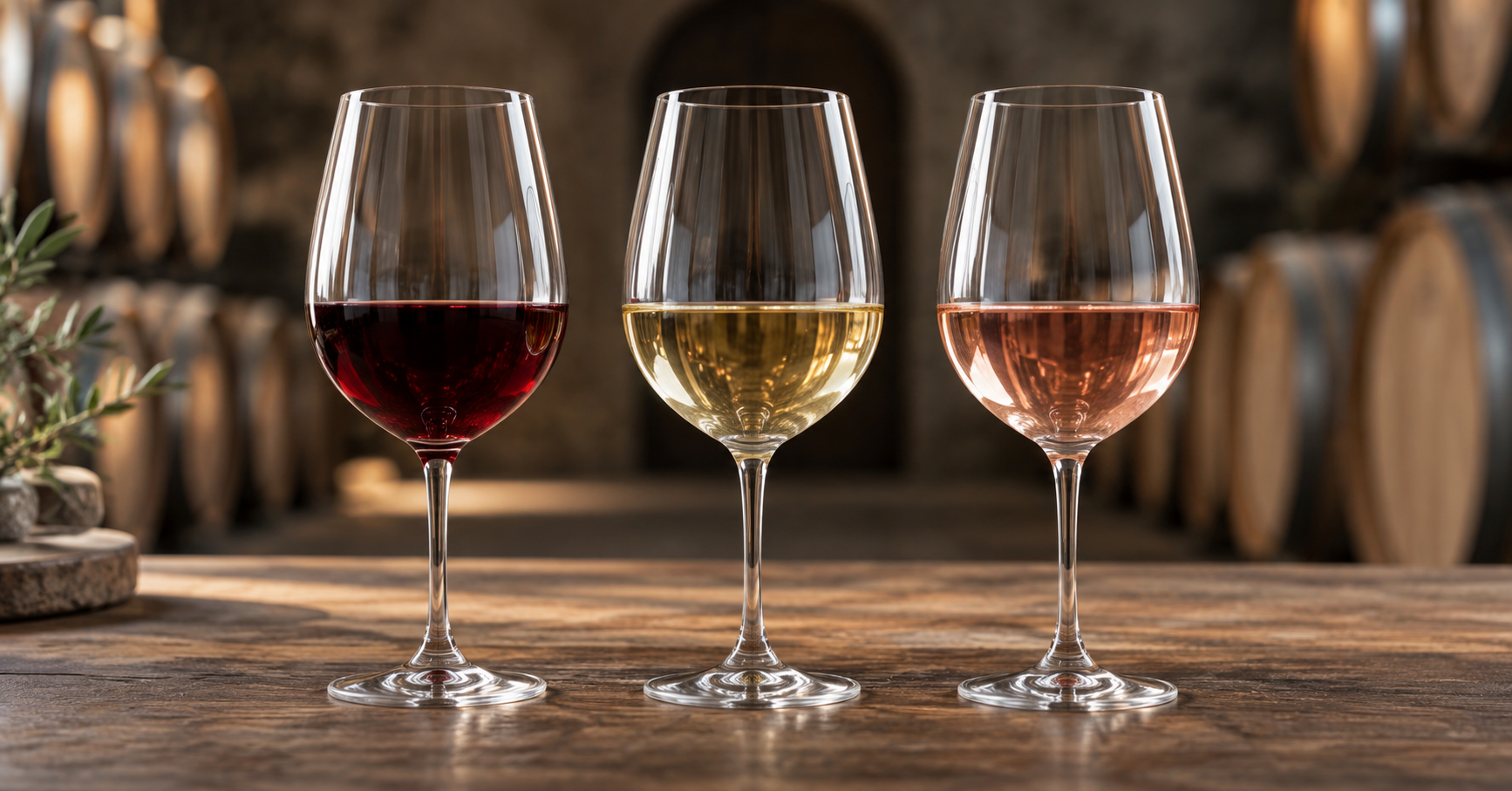
Many people assume the difference between red, white, and rosé wine simply comes down to the color of the grapes used. While that’s partly true, the real distinction lies in the production process — a process that directly shapes each wine’s taste, aroma, and texture. In this article, we break down exactly what sets these three wine types apart, so next time you’ll know precisely what you’re ordering.
Red Wine
Red wine is made from dark-skinned grapes, and the key step is that the grape skins stay in contact with the juice throughout fermentation. It’s the skins that give red wine its color — and its tannins, the compounds responsible for that familiar “drying” sensation on the palate. The longer the skins remain in contact with the juice, the darker, fuller, and more tannic the wine becomes.
Typical characteristics of red wine:
- Full-bodied, robust flavor
- Notes of dark fruit (plum, cherry, blackberry), sometimes spice or vanilla if oak-aged
- Excellent with red meat, aged cheeses, and spiced dishes
White Wine
Unlike red wine, white wine production removes the skins immediately, before fermentation begins — regardless of whether the grapes themselves are white or, in some cases, dark-skinned with the skin removed early. The result is a lighter, fresher wine with brighter acidity and no tannins.
Typical characteristics of white wine:
- Fresh, light, crisp flavor
- Notes of citrus, green apple, floral, or tropical fruit
- Excellent with fish, seafood, chicken, and summer salads
Rosé Wine
Rosé wine results from brief skin contact between dark grape skins and the juice — typically just a few hours, rather than the days or weeks used for red wine. Once the juice reaches the desired pink hue, the skins are removed and fermentation continues much like it would for a white wine.
Typical characteristics of rosé wine:
- Freshness similar to white wine, with a bit more fruit depth
- Notes of strawberry, melon, citrus
- Highly versatile for pairing — works with light meals, grilled food, salads, and even spiced dishes
How production changes colour, tannin and texture
The biggest difference between red, white and rosé wine comes from how long the juice remains in contact with grape skins. Red wines ferment with the skins for longer, which extracts colour, tannin and flavour compounds. White wines are generally fermented without extended skin contact, so they usually show lighter colour and much less tannin. Rosé sits between the two, using short skin contact to create its pink colour while keeping a fresher, lighter structure.
That difference in production is why two wines made from related grapes can feel very different in the glass. Colour is only the most visible result; texture, aroma and structure change as well.
Which style works best with different foods?
Red wine often suits richer dishes because tannin and structure can stand up to grilled or roasted meat. White wine tends to work well with fish, seafood, chicken and lighter sauces because freshness and acidity keep the pairing lively. Dry rosé is especially flexible with salads, grilled vegetables, lighter meats and mildly spiced dishes.
These are useful starting points rather than strict rules. Cooking method, sauce and seasoning often matter as much as the main ingredient.
Serving temperature at a glance
- Red wine: usually best slightly cool rather than warm, often around 15–18°C depending on style.
- White wine: generally fresher at around 7–13°C, with richer whites served a little warmer.
- Rosé wine: commonly around 8–11°C for freshness without hiding the fruit.
What these differences mean in the glass
Production choices are easy to notice when you taste the wines side by side. Red wine usually has more grip and structure because of skin contact and tannin. White wine tends to feel brighter and lighter, although richer white styles can still have considerable body. Rosé keeps much of the freshness associated with white wine while adding some of the fruit character that comes from dark-skinned grapes. These differences help explain why each style suits different foods, seasons and occasions.
Which wine is “better”?
The honest answer: none of them. Each wine type has its own purpose, occasion, and flavor profile. The right choice depends on personal taste, the food it’s paired with, and the setting. The best way to find your favorite is simply to try all three.
If you’d like to explore further, compare MM Winery Vranec, Chardonnay and Rosé, then see our wine serving temperature guide for practical serving advice.
MM Winery Vranec
Explore the wine connected to this story and discover its character, origin and style.
View Wine Details →