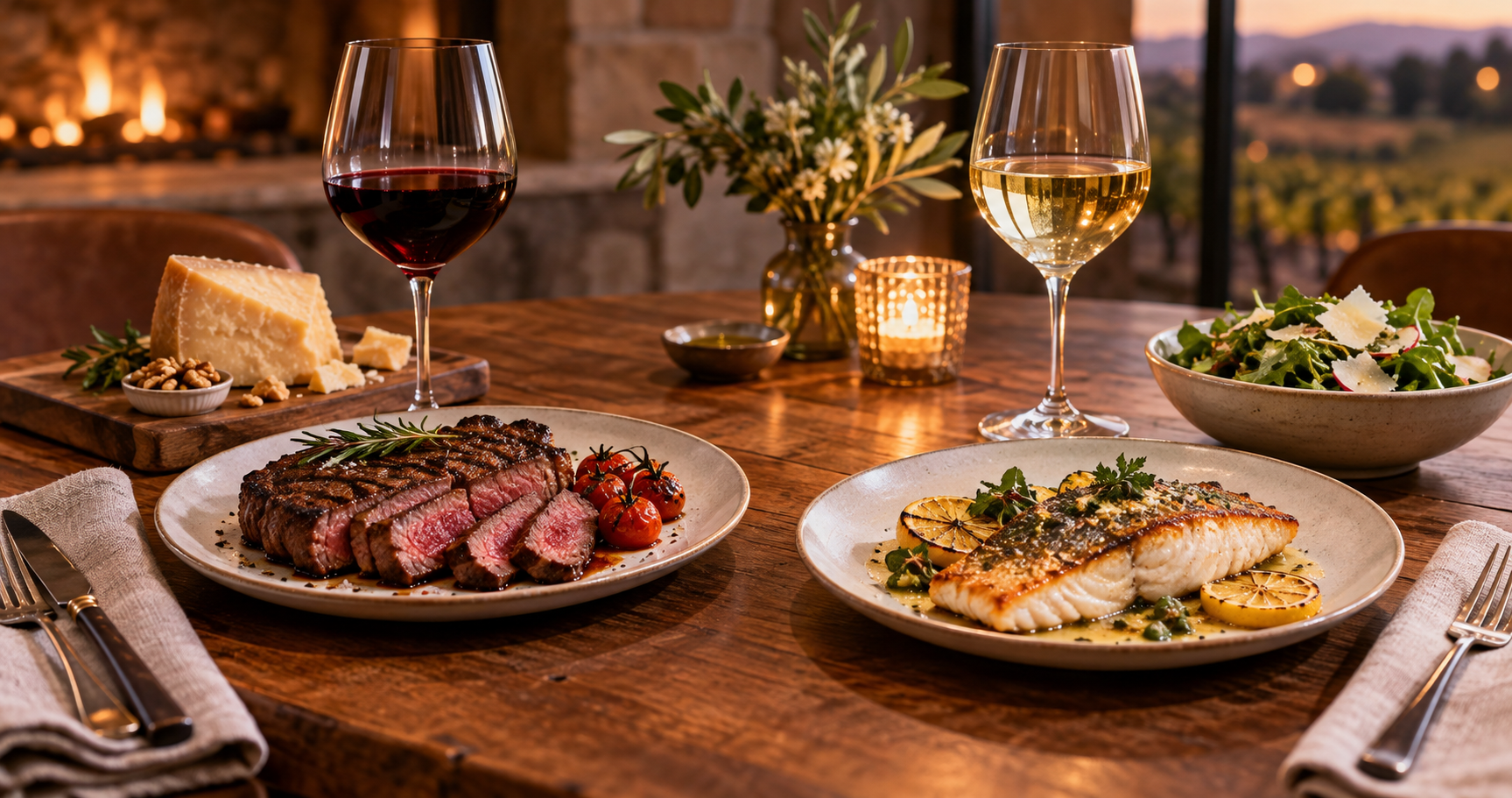
One of the most common questions when planning a dinner or celebration is: “Which wine goes with this dish?” While sommeliers follow countless detailed rules, the basics of food and wine pairing are actually quite simple once you understand a few key principles. In this guide, we break down the most important guidelines so you can confidently choose a wine for any table.
The basic rule: balance
The goal of any good pairing is for neither the wine nor the food to overpower the other. Heavier, richer food calls for a fuller-bodied wine, while lighter food calls for something lighter and fresher. Keep this one rule in mind, and you’re already off to a great start.
Red Meat and Grilled Dishes
Roasted and grilled meats — especially beef or lamb — call for a fuller-bodied red wine with pronounced tannins. Tannins cut through the fat in the meat, “resetting” the palate with every bite and making the next one just as enjoyable.
Tip: The more intense the preparation (spiced, charcoal-grilled), the bolder and darker the wine can be.
Fish and Seafood
With fish and seafood, a fresh, dry white wine with good acidity is usually the best match. The wine’s acidity complements the freshness of the seafood without overwhelming its delicate texture.
Tip: If the fish is prepared with a richer sauce (spicy or buttery), consider a fuller-bodied white or even a light rosé.
Chicken and White Meat
Chicken and other white meats are quite flexible when it comes to pairing. Depending on preparation (roasted, fried, sauced), they can work well with both a fuller white wine and a lighter red.
Cheese
Cheese is a wonderful companion to wine, but not every cheese pairs with every wine:
- Soft, creamy cheeses (like brie-style) → fresh white or rosé wine
- Hard, aged cheeses → fuller-bodied red wine
- Spicy or blue cheeses → a sweeter wine, which balances the saltiness
Salads and Light Starters
For salads and light starters, rosé or a light white wine is almost always a safe bet. The wine’s freshness complements the crisp ingredients in the dish.
Desserts
When it comes to dessert, the key rule is: the wine should be sweeter than the dessert itself, otherwise it will taste sour and unpleasant by comparison. A small pour of a sweeter wine is a lovely way to finish a meal.
Match intensity, not colour alone
A useful pairing principle is to match the intensity of the wine with the intensity of the food. A delicate dish can be overwhelmed by a powerful wine, while a very light wine may disappear next to a rich, strongly seasoned meal. This is why preparation matters: grilled chicken can work with a light red, while chicken in a creamy sauce may suit a fuller white.
How acidity, tannin, sweetness and fat interact
Acidity makes wine feel fresh and can balance rich or fatty food. Tannin gives many red wines structure and often works well with protein-rich dishes. Sweetness can soften the effect of spicy or salty food, although the wine should generally be at least as sweet as the dish. Fat and creamy textures often benefit from a wine with enough acidity to keep the palate refreshed.
Thinking about these elements is more useful than memorising dozens of fixed pairings.
Macedonian wine pairing examples
A structured Vranec can suit grilled beef, lamb and slow-cooked dishes. Merlot is flexible with roast meat, mushrooms and savoury pasta. Chardonnay can work with poultry, richer fish dishes and creamy sauces, while Riesling and other fresh whites can suit seafood and lighter plates. Dry rosé is a versatile option for salads, grilled vegetables and informal shared meals.
Quick pairing table
| Food style | Useful wine direction | Why it can work |
|---|---|---|
| Grilled beef or lamb | Structured red | Tannin and body match the richness of the dish. |
| Fish and seafood | Fresh dry white | Acidity supports delicate flavours and freshness. |
| Chicken or roast vegetables | White, rosé or lighter red | The best match depends on sauce and preparation. |
| Mature cheese | Medium or fuller red | Structure and savoury character can complement aged flavours. |
| Salads and light starters | Rosé or crisp white | Freshness keeps the pairing light and balanced. |
One more rule: consider the sauce
The sauce can change a pairing completely. A simple grilled fish may call for a crisp white, while the same fish with a rich butter sauce can handle a fuller white. Tomato-based sauces bring acidity of their own, so the wine should have enough freshness to stay balanced. Sweet glazes and very spicy sauces also change the equation, which is why pairing the wine with the preparation—not only the main ingredient—is such a useful habit.
There’s no “wrong” choice
While these guidelines are a useful starting point, at the end of the day, what matters most is that you and your guests enjoy the wine. Pairing rules are guidelines, not strict laws — experimenting is part of the fun of discovering wine.
For practical examples, explore MM Winery Merlot, Chardonnay and Rosé, or read how to choose the right wine for any occasion.
Pairing Vranec? Read our dedicated Vranec food pairing guide for grilled meat, lamb, mature cheese and richer dishes.
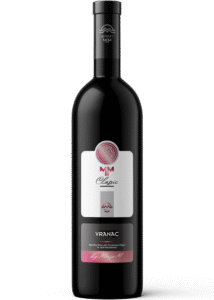
MM Winery Vranec
Explore the wine connected to this story and discover its character, origin and style.
View Wine Details →