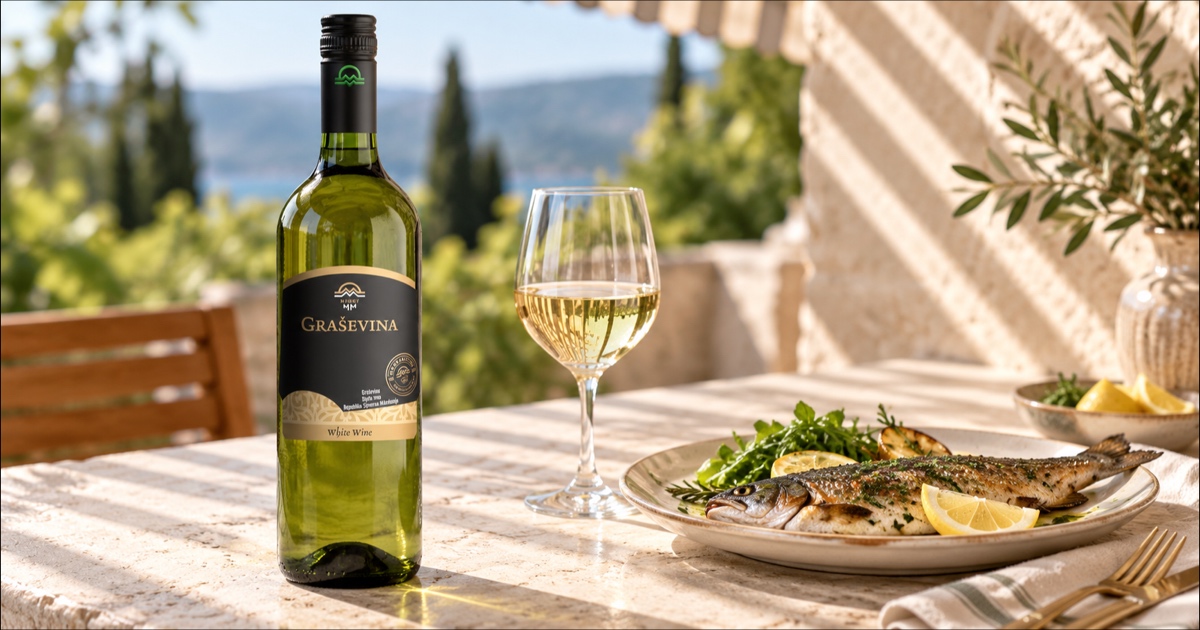
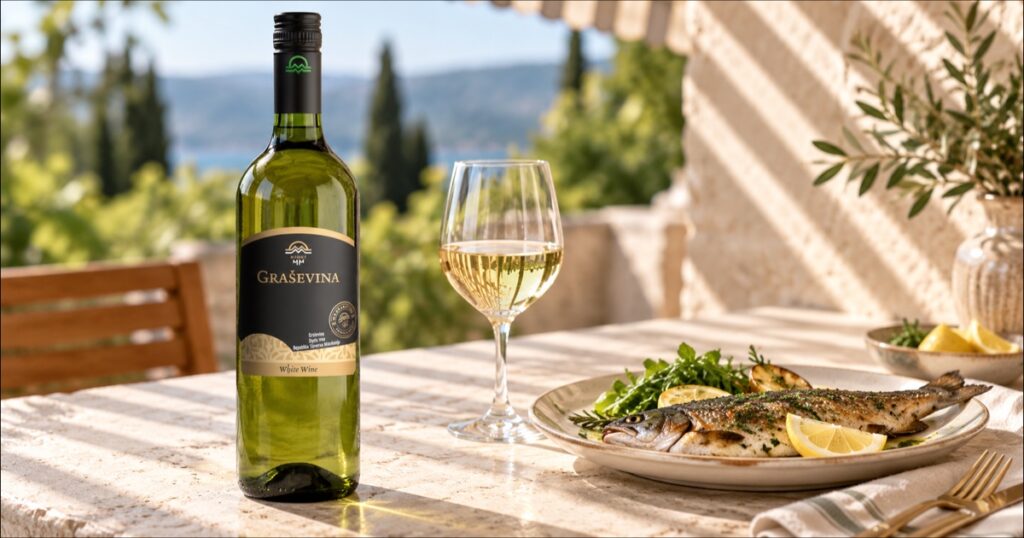
Graševina is one of Central and Southeast Europe’s most familiar white wine grapes, yet its many names can make it surprisingly difficult to understand. Depending on the country, the same variety may appear as Graševina, Grashevina, Welschriesling, Olaszrizling, Laški Rizling or Italian Riesling. The most important fact is simple: despite the name, it is not the same grape as Rhine Riesling.
That distinction gives wine lovers a useful starting point. Graševina is valued for freshness, easy drinking and food-friendly character. In a dry style, it can offer citrus, green apple, subtle floral notes and a clean finish, making it a versatile white wine for everyday meals and relaxed occasions. MM Winery Basic Grashevina is made from 100% Italian Riesling, presented as a dry white wine with 12.0% alcohol in a 1 litre bottle.
What Is Graševina Wine?
Graševina is a white grape variety widely grown across Central and Southeast Europe. Its international reference name is often Welschriesling, while regional names include Graševina, Olaszrizling, Laški Rizling and Italian Riesling. These different names reflect the variety’s long history across several wine cultures rather than different grapes.
The variety is known for retaining useful acidity and producing approachable wines with a light-to-medium body. Its style depends on vineyard conditions, harvest timing and winemaking choices. Young dry examples are usually made to emphasise freshness, clean fruit and an uncomplicated finish, while lower yields and careful site selection can produce wines with greater depth and texture.
Is Graševina the Same as Riesling?
No. Graševina and Rhine Riesling are separate grape varieties and should not be confused. The word “Riesling” in names such as Italian Riesling or Welschriesling is historical and does not indicate a close relationship to the classic German grape.
Rhine Riesling is usually more intensely aromatic and can show lime, peach, flowers and pronounced mineral character. Graševina is often gentler and more neutral in aroma, with green apple, lemon, white flowers and a fresh, sometimes subtly savoury finish. Both grapes can produce dry wines with lively acidity, but their flavour profiles and identities are distinct.
For a detailed look at the other variety, read our Riesling wine guide.
What Does Graševina Taste Like?
The exact taste depends on origin and production style, but dry Graševina commonly combines fresh fruit with a clean, refreshing structure. Typical aromas may include lemon, green apple, pear and white flowers. Some examples also show gentle herbal, almond or mineral impressions.
The palate is generally light to medium in body. Acidity provides freshness without making the wine feel severe, while the finish is often clean and easy to enjoy. This balance makes Graševina suitable both as an aperitif and as a wine for the table.
A typical dry Graševina profile
- Appearance: pale straw to light yellow
- Aroma: lemon, green apple, pear and white flowers
- Palate: dry, fresh and clean
- Body: light to medium
- Finish: crisp, balanced and gently persistent
Why Graševina Works So Well with Food
Graševina is naturally practical at the table. Its freshness can cut through moderate richness, while its restrained aroma does not compete with delicate ingredients. A dry style works particularly well with simple dishes in which the food should remain the centre of attention.
Fish and seafood
Grilled white fish, trout, prawns, calamari and lightly prepared seafood are reliable choices. Lemon, parsley and other fresh herbs echo the wine’s bright character. Very rich sauces may overwhelm a lighter Graševina, so simpler preparations usually work best.
Poultry and light meats
Roast chicken, turkey, lightly seasoned pork and cold meat platters can pair well. The wine’s acidity refreshes the palate, while its gentle fruit complements rather than dominates the dish.
Vegetables, salads and cheese
Fresh salads, grilled courgette, asparagus, vegetable pies and dishes with young cheese suit a dry Graševina. Mild white cheeses, fresh goat cheese and lightly salted cheeses are especially comfortable partners.
Everyday Macedonian dishes
The wine can also fit naturally with lighter regional dishes: shopska salad, grilled vegetables, baked peppers, cheese pastries and simply seasoned fish. The key is balance. Choose dishes with freshness and moderate intensity rather than heavy sauces or very hot spice.
For a broader method that works across wine styles, see our simple wine and food pairing guide.
How to Serve Graševina
A dry Graševina is best served chilled, but not so cold that its aroma disappears. A temperature of approximately 8–10°C is a dependable starting point. If the bottle comes directly from a very cold refrigerator, allow it to rest briefly before serving.
Use a medium-sized white-wine glass with a slightly narrowing rim. The shape preserves freshness while giving the aroma enough space to open. Young Graševina normally does not require decanting and can be served soon after the bottle is opened.
Temperature has a strong influence on every wine. Our wine serving temperature guide explains how to serve white, red and rosé wines with greater consistency.
When to Choose Graševina
Graševina is a useful choice when you want a fresh, dry white wine that is easy to share. It works for casual lunches, family meals, garden gatherings and larger tables where the menu includes several lighter dishes. Its accessible style also makes it a good introduction for people who are beginning to explore dry white wine.
The 1 litre format of MM Winery Basic Grashevina is particularly practical for shared meals. It offers more wine than a standard 750 mL bottle while keeping the presentation simple and suitable for everyday service.
How to Store Graševina
Before opening, keep the bottle in a cool, dark place away from sunlight, heat and frequent temperature changes. For short-term storage, a stable cupboard is usually sufficient. For longer storage, a wine refrigerator offers more consistent conditions.
After opening, close the bottle firmly and place it in the refrigerator. A young dry Graševina is generally best enjoyed within two to three days, while its fruit and freshness remain clear. A vacuum stopper can slow oxidation, but it cannot stop the gradual loss of aroma.
Read our practical guide on how to store opened wine after dinner for more useful steps.
MM Winery Basic Grashevina at a Glance
MM Winery Basic Grashevina is made from 100% Italian Riesling and presented as a dry white wine. With 12.0% alcohol and a 1 litre format, it is designed as a fresh and approachable choice for everyday meals, informal gatherings and uncomplicated enjoyment.
- Wine type: dry white wine
- Grape variety: 100% Italian Riesling / Graševina
- Alcohol: 12.0% vol.
- Bottle size: 1 litre
- Recommended serving temperature: 8–10°C
Visit the MM Winery Basic Grashevina product page for the current product presentation. Distributors and retail partners interested in export formats or private-label cooperation can visit our Trade & Export page.
Frequently Asked Questions About Graševina
Is Graševina the same as Italian Riesling?
Yes. Italian Riesling is one of the names used for the grape also known as Graševina, Grashevina or Welschriesling. Names vary by country and market.
Is Graševina related to Rhine Riesling?
No. They are different grape varieties. Graševina may carry “Riesling” in some regional names, but it has its own identity and flavour profile.
Is Graševina dry or sweet?
It can be made in several styles, but many everyday examples are dry and fresh. MM Winery Basic Grashevina is a dry white wine.
What food pairs with dry Graševina?
Good pairings include grilled fish, seafood, roast poultry, salads, vegetable dishes, cheese pastries and mild white cheeses.
What temperature should Graševina be served at?
Serve a young dry Graševina chilled at approximately 8–10°C. Avoid serving it excessively cold because very low temperatures can mute its aroma.
A Fresh Central European Classic
Graševina’s many names can be confusing, but the wine itself is easy to understand: fresh, dry, versatile and comfortable at the table. Its difference from Rhine Riesling deserves to be clear, while its own character deserves greater attention. MM Winery Basic Grashevina presents that character in a practical 1 litre format made for sharing and everyday enjoyment.

MM Winery Basic Grashevina
Discover the fresh, dry 1 litre white wine connected to this guide.
MM Winery Riesling
Explore the wine connected to this story and discover its character, origin and style.
View Wine Details →