Pinot Noir wine is appreciated for its expressive aroma, fresh character and ability to bring detail to the table without relying on weight or intensity. Often associated with red fruit and a relatively gentle tannin structure, it offers an appealing alternative for wine lovers who enjoy a more delicate style of red wine.
The variety can take different forms depending on where it is grown and how it is made. Understanding its typical character, serving temperature and food-pairing possibilities makes it easier to choose a bottle and enjoy it with confidence.
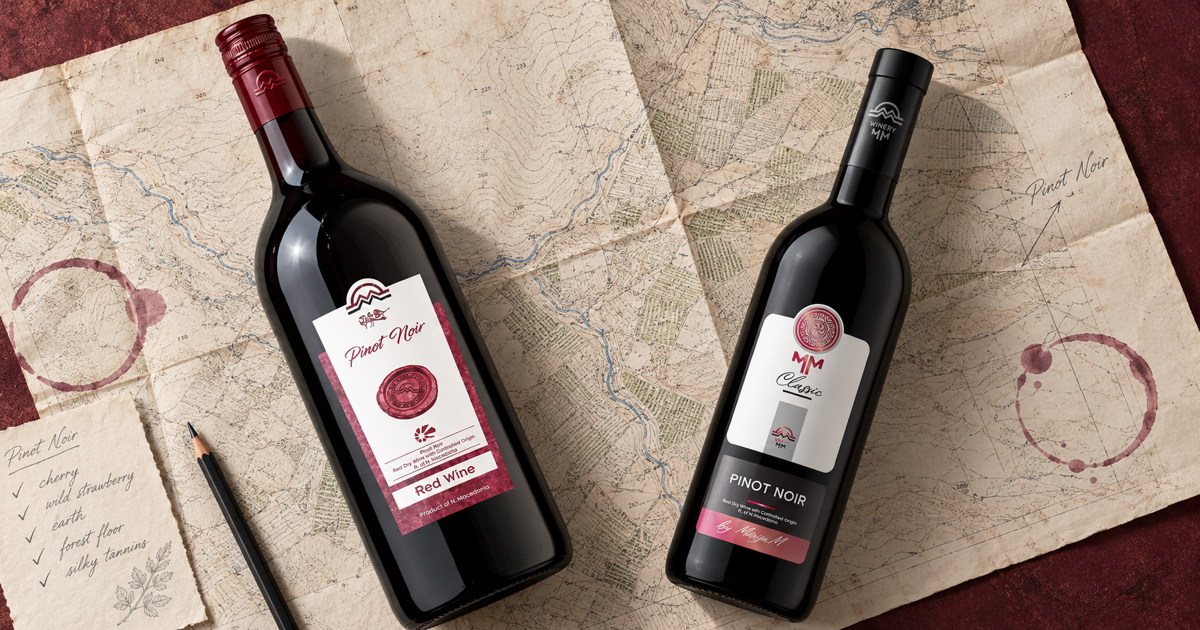
MM Winery presents this international grape in two collections: Classic Pinot Noir, in a 750 mL bottle, and Magnum Pinot Noir, in a 1.5 litre format. Both are dry red wines made from 100% Pinot Noir.
What Is Pinot Noir Wine?
Pinot Noir is a red grape variety closely associated with Burgundy in France and cultivated in wine regions around the world. Its thin skins and sensitivity to growing conditions make vineyard location and careful cultivation particularly important.
Compared with many fuller red varieties, Pinot Noir often produces wines with a lighter colour and a more delicate structure. The interest lies in the relationship between fragrance, acidity, fruit and texture. A pale-looking wine can still have a distinctive aroma and a persistent finish.
Climate, harvest conditions and winemaking all influence the final expression. For more background on the role of place, read our guide to how terroir shapes Macedonian wine.
What Does Pinot Noir Taste Like?
Typical Pinot Noir descriptions include cherry, raspberry and strawberry, sometimes accompanied by floral, earthy or gently spicy notes. With maturity, some examples develop more savoury complexity.
These are general characteristics of the variety rather than a fixed description of every bottle. A younger wine, a more mature example and wines from different growing conditions may show noticeably different profiles.
On the palate, many Pinot Noir wines combine refreshing acidity with relatively gentle tannins. This can create a supple impression, although the level of body and structure varies.
A typical Pinot Noir profile
- Appearance: often light to medium ruby
- Aroma: red berries and cherry, sometimes with floral or earthy notes
- Palate: commonly dry, with noticeable freshness
- Body: often light to medium
- Texture: generally gentler tannins than more powerful red styles
Is Pinot Noir Dry or Sweet?
Most still red Pinot Noir wines are produced in a dry style. Their fruit aromas can suggest sweetness, but fruitiness and residual sugar are different things.
A wine can smell of ripe cherries or strawberries and still taste dry. The producer’s description and the bottle label are more reliable guides to sweetness than aroma alone.
Both MM Winery Classic Pinot Noir and Magnum Pinot Noir are listed as dry red wines.
Best Food Pairings for Pinot Noir
Pinot Noir offers several possibilities at the table. When choosing a dish, consider its richness, sauce and seasoning as well as the main ingredient.
Roast poultry and duck
Roast chicken with herbs is a practical starting point. Duck is another established Pinot Noir pairing, particularly when the sauce is balanced rather than strongly sweet or spicy.
The aim is to let the flavour of the dish and the character of the wine remain clear. Heavy sauces can dominate a more delicate bottle.
Mushrooms and vegetable dishes
Mushroom risotto, roasted mushrooms and savoury vegetable tarts are useful combinations to explore. Their earthy and roasted flavours can provide an interesting setting for the wine.
Keep seasoning balanced and taste the finished dish with the wine. Butter, cheese and sauces can change a pairing as much as the vegetables themselves.
Salmon and lighter meats
Roasted salmon, pork tenderloin and gently prepared veal offer further possibilities. Preparation matters: a simple roast and a heavily glazed version of the same ingredient may call for different wines.
Food for a shared table
Herb-roasted chicken, a mushroom pie or a selection of mild cheeses can provide an approachable setting for Pinot Noir. These are suggested combinations to try, rather than prescribed pairings for a particular MM Winery bottle.
For a broader method, see our simple wine and food pairing guide.
How to Serve Pinot Noir Wine
Pinot Noir is generally best served slightly cool rather than at the temperature of a warm room. Approximately 12–15°C is a useful starting range, allowing the wine to warm gradually in the glass.
If the bottle has been standing in a warm dining room, a short period in the refrigerator can help. Avoid chilling it so strongly that its aroma becomes difficult to appreciate.
Use a clean red-wine glass with enough space to swirl gently and a rim that narrows towards the top. A modest pour leaves room for the aromas to develop.
Decanting is not automatically necessary. Open the bottle, taste it and allow some time in the glass before deciding whether further aeration is useful.
For advice across wine styles, read our wine serving temperature guide.
MM Winery Classic and Magnum Pinot Noir at a Glance
MM Winery offers two Pinot Noir presentations with different bottle sizes and listed alcohol levels.
| Specification | Classic Pinot Noir | Magnum Pinot Noir |
|---|---|---|
| Wine type | Dry red wine | Dry red wine |
| Grape variety | 100% Pinot Noir | 100% Pinot Noir |
| Origin | North Macedonia | North Macedonia |
| Bottle size | 750 mL | 1.5 L |
| Listed alcohol | 13.0% vol. | 12.5% vol. |
The Classic format is convenient when a standard bottle suits the occasion. The Magnum contains twice the volume and can be practical for a larger table.
The two presentations should be considered according to their individual product information. Bottle size alone does not establish flavour, quality or ageing potential, and these wines also have different listed alcohol levels. Check the label on the bottle you purchase for its current specifications.
Explore the Classic Pinot Noir product page and the Magnum Pinot Noir product page.
For more about the larger format, read Magnum Wine Bottle: Why 1.5 Litres Changes the Table.
How to Store Pinot Noir Before and After Opening
Before opening, keep the bottle in a cool, dark place away from direct sunlight and rapid temperature changes. For longer storage, suitable temperature-controlled conditions are preferable to a warm living space.
After opening, close the bottle securely and refrigerate it. Before serving again, allow the wine to warm slightly and assess its aroma and taste. Refrigeration slows change, but an opened wine will still gradually lose freshness.
Our guide to storing opened wine after dinner explains the practical steps.
Frequently Asked Questions About Pinot Noir Wine
Is Pinot Noir a light red wine?
It is often lighter in body than more powerful red wines, although the exact style depends on origin, vintage and winemaking.
Is Pinot Noir sweet?
Most still red examples are dry. MM Winery lists both Classic and Magnum Pinot Noir as dry red wines.
What food goes well with Pinot Noir?
Roast poultry, duck, mushroom dishes, roasted salmon and lighter meat dishes are useful starting points. Consider the sauce and seasoning when choosing the pairing.
Should Pinot Noir be chilled?
Yes, lightly. Approximately 12–15°C is a useful starting temperature, followed by gradual warming in the glass.
Does Pinot Noir need decanting?
Not always. Taste the wine first and allow it some time in the glass before deciding.
What is the difference between MM Winery Classic and Magnum Pinot Noir?
Classic is presented in a 750 mL bottle at 13.0% alcohol. Magnum is presented in a 1.5 litre bottle at 12.5%. Both are dry red wines made from 100% Pinot Noir.
A Red Wine Worth Exploring in Detail
Pinot Noir invites attention to aroma, freshness and texture. Serving it slightly cool and choosing food with balanced seasoning can help those qualities become easier to appreciate.
For wine lovers exploring North Macedonia, MM Winery’s Classic and Magnum collections offer two presentations of this distinctive grape. Discover Classic Pinot Noir and Magnum Pinot Noir to find the format that suits your table.

MM Winery Classic Pinot Noir
Dry red wine made from 100% Pinot Noir. 750 mL · 13.0% vol.

MM Winery Magnum Pinot Noir
Dry red wine made from 100% Pinot Noir. 1.5 L · 12.5% vol.