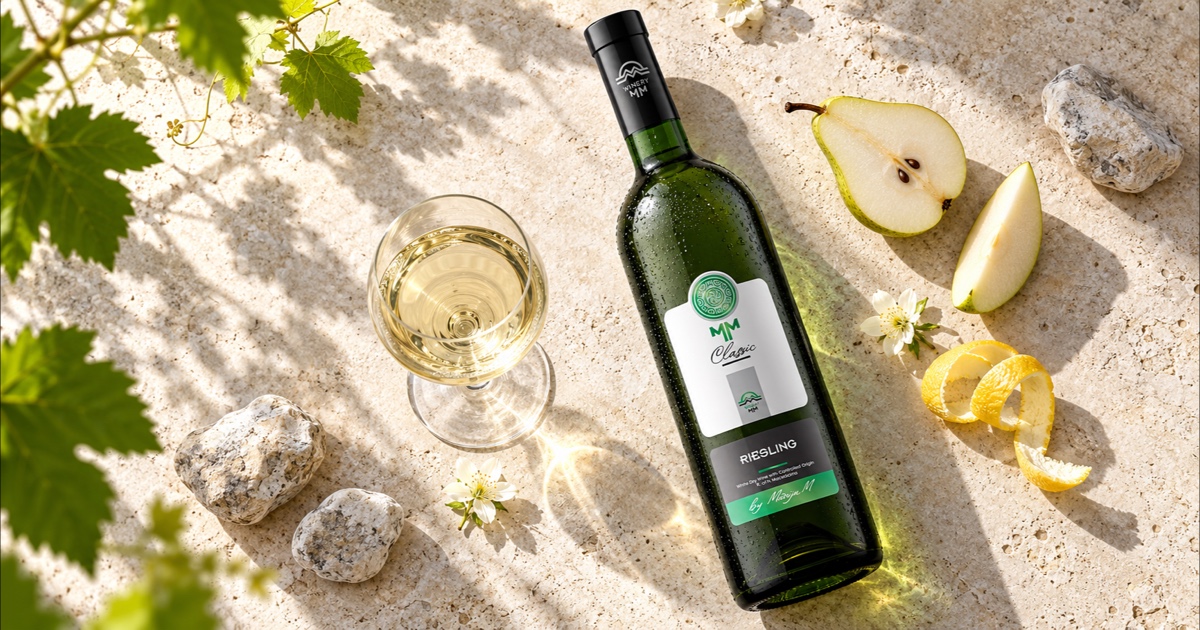
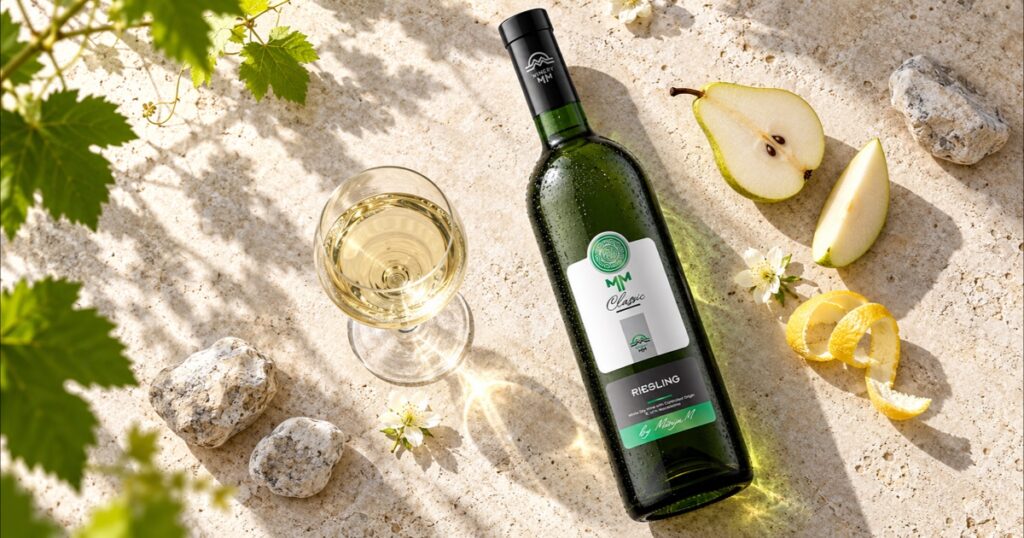
Riesling wine is known for its bright acidity, expressive aroma and remarkable ability to reflect the place where its grapes are grown. Although the variety is often associated with sweetness, Riesling can be made in styles ranging from bone-dry and crisp to richly sweet. That range is one reason it remains one of the world’s most versatile white wines.
For wine lovers looking beyond the most familiar international regions, North Macedonia offers a distinctive setting for this aromatic grape. Warm days, cooler nights and established vineyard areas help preserve freshness while allowing the fruit to ripen fully. MM Winery Riesling is a dry, 100% Riesling from North Macedonia, bottled at 12.5% alcohol in a 750 mL format.
What Is Riesling Wine?
Riesling is a white grape variety valued for its naturally high acidity and clear aromatic character. It can produce light, refreshing wines as well as more concentrated styles with excellent ageing potential. Unlike varieties that rely heavily on oak for flavour, Riesling is usually appreciated for the purity of its fruit, floral notes and mineral expression.
The grape responds strongly to climate and vineyard conditions. In cooler places it often shows lime, green apple and delicate floral notes. In warmer, sunnier areas, the profile may move towards ripe citrus, peach, pear and yellow fruit while retaining the acidity that gives the wine energy and balance.
Is Riesling Always Sweet?
No. Riesling wine can be dry, off-dry, medium-sweet or sweet. The grape’s aromatic intensity sometimes makes even a dry Riesling seem fruitier than it actually is, which can cause confusion. Sweetness is determined by the amount of residual sugar left after fermentation, while fruitiness describes the aromas and flavours perceived in the wine.
A dry Riesling contains little residual sugar and finishes cleanly on the palate. Its acidity makes it feel lively and precise, while the fruit aromas remain expressive. MM Winery Riesling belongs to this dry style, making it suitable for aperitifs, meals and occasions where a fresh white wine is preferred.
What Does Riesling Taste Like?
Riesling’s exact character depends on origin, vintage and winemaking, but several features are common. Typical aromas include citrus, green or yellow apple, pear, white peach and flowers. Some wines also show herbal or mineral impressions. With bottle age, mature Riesling can develop more complex notes while maintaining its fresh structure.
A well-balanced dry Riesling should combine aromatic clarity with firm acidity. The fruit should feel defined rather than heavy, and the finish should remain refreshing. That balance is especially important at the table because it allows the wine to complement food without overpowering it.
A typical dry Riesling profile
- Appearance: pale straw to light golden colour
- Aroma: citrus, apple, pear, white peach and floral notes
- Palate: dry, fresh and clean, with bright acidity
- Body: usually light to medium
- Finish: crisp, balanced and persistent
Riesling from North Macedonia
North Macedonia has a long winemaking tradition and a climate shaped by abundant sunshine, warm continental and Mediterranean influences, and meaningful temperature differences between day and night. These conditions can support ripe fruit flavours while helping grapes retain the acidity needed for balanced white wine.
The Tikveš and Ovče Pole wine-growing areas are central to the country’s viticultural identity. Vineyard position, soil, exposure and seasonal conditions all influence the final wine. To understand why the same grape can taste different from one place to another, read our guide to how terroir shapes Macedonian wine.
In a dry Macedonian Riesling, the result can be an attractive meeting of ripe fruit and freshness: enough sunshine for flavour development, balanced by acidity that keeps the wine lively. This makes the style approachable for new wine drinkers while remaining interesting for experienced consumers.
How to Serve Riesling Wine
Serving temperature has a direct effect on aroma, texture and balance. If Riesling is served too cold, its aromas can become muted. If it is too warm, the wine may lose some of its refreshing character.
For a dry Riesling, a serving temperature of approximately 8–10°C is a reliable starting point. Place the bottle in the refrigerator for a few hours, then allow it to rest briefly after opening if it feels excessively cold. The temperature will rise gradually in the glass.
Use a medium-sized white-wine glass with a gently narrowing rim. This shape gives the aromas room to develop while directing them towards the nose. A clean, scent-free glass is essential; detergent residue or cabinet odours can interfere with a delicate aromatic wine.
Most young dry Rieslings do not require decanting. Open the bottle shortly before serving and taste it as it warms slightly. For more detailed guidance across wine styles, see our wine serving temperature guide.
Best Food Pairings for Dry Riesling
Riesling is one of the most food-friendly white wines because acidity refreshes the palate, aromatic fruit complements a wide range of ingredients, and a lighter body avoids overwhelming delicate dishes. A dry style works particularly well where freshness and precision are more important than weight.
Fish and seafood
Grilled white fish, trout, prawns and simply prepared seafood are natural partners. Citrus-based sauces and fresh herbs can echo the wine’s bright profile. Avoid very heavy cream sauces if you want the Riesling’s freshness to remain the focus.
Poultry and lighter meats
Roast chicken, turkey, lightly seasoned pork and dishes with apple or mild mustard can work well. The wine’s acidity cuts through moderate richness, while its fruit softens savoury and gently spiced flavours.
Fresh vegetables and salads
Green salads, asparagus, courgette, fresh herbs and vegetable tarts suit a dry Riesling, especially when the dressing is balanced rather than sharply vinegary. Goat cheese, young white cheeses and soft, mildly salty cheeses can add a pleasing contrast.
Mildly spicy dishes
Aromatic dishes with ginger, coriander, lemongrass or mild chilli can be excellent partners. For hotter food, an off-dry Riesling is often preferable because a small amount of sweetness softens the heat. With a dry Riesling, keep the spice controlled and let fragrance lead.
Pairing is ultimately about balance rather than rigid rules. Consider the sauce, seasoning and cooking method as much as the main ingredient. Our simple wine and food pairing guide offers a practical method for planning a complete meal.
How to Store Riesling Before and After Opening
Before opening, keep the bottle away from sunlight, vibration and rapid temperature changes. A cool, dark cupboard is suitable for short-term storage, while a wine refrigerator or temperature-controlled cellar is better for longer periods. If the bottle has a natural cork, horizontal storage helps keep the cork in contact with the wine.
After opening, close the bottle firmly and return it to the refrigerator. A vacuum stopper can slow oxidation, although it cannot stop it completely. A fresh, young Riesling is usually best enjoyed within two to three days of opening. Taste and aroma will gradually become less vivid, so earlier is generally better.
For practical steps that apply to other styles as well, read how to store opened wine after dinner.
MM Winery Riesling at a Glance
MM Winery Riesling is made from 100% Riesling grapes and presented as a dry white wine from the Republic of North Macedonia. The wine is bottled in a 750 mL format at 12.5% alcohol by volume. Its style is intended to highlight freshness, aromatic character and easy food pairing.
- Wine type: dry white wine
- Grape variety: 100% Riesling
- Origin: Republic of North Macedonia
- Alcohol: 12.5% vol.
- Bottle size: 750 mL
- Recommended serving temperature: 8–10°C
View the full MM Winery Riesling product page for current product presentation and further details. Trade partners interested in distribution, private-label production or export formats can also visit our Trade & Export page.
Frequently Asked Questions About Riesling Wine
Is Riesling a dry or sweet wine?
It can be either. Riesling is produced across a wide sweetness spectrum, from bone-dry to dessert wine. Check the producer’s description or technical information. MM Winery Riesling is a dry white wine.
What temperature should Riesling be served at?
Dry Riesling is generally best served chilled at about 8–10°C. Very cold temperatures can hide its aroma, while warmer service can reduce its crisp impression.
What food goes best with dry Riesling?
Good choices include grilled fish, seafood, roast poultry, fresh salads, vegetable dishes, mild cheeses and aromatic food with moderate spice.
Does Riesling need to breathe?
Most young Rieslings can be served soon after opening and do not need decanting. Letting the wine warm slightly in the glass may reveal more aroma.
How long does opened Riesling last?
When resealed and refrigerated, a fresh dry Riesling is usually at its best for two to three days. Its aroma and flavour will gradually fade through oxidation.
A Fresh and Versatile White Wine
Riesling combines aromatic intensity, bright acidity and unusual versatility. Understanding its sweetness level, serving temperature and food-pairing strengths makes it easier to choose the right bottle and enjoy it at its best. For drinkers exploring wines from North Macedonia, MM Winery Riesling offers a dry expression of this classic grape with a clear regional identity.
MM Winery Riesling
Explore the wine connected to this story and discover its character, origin and style.
View Wine Details →